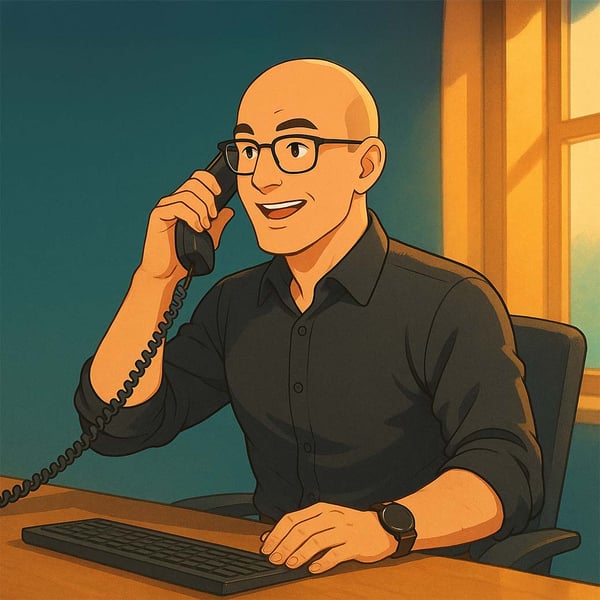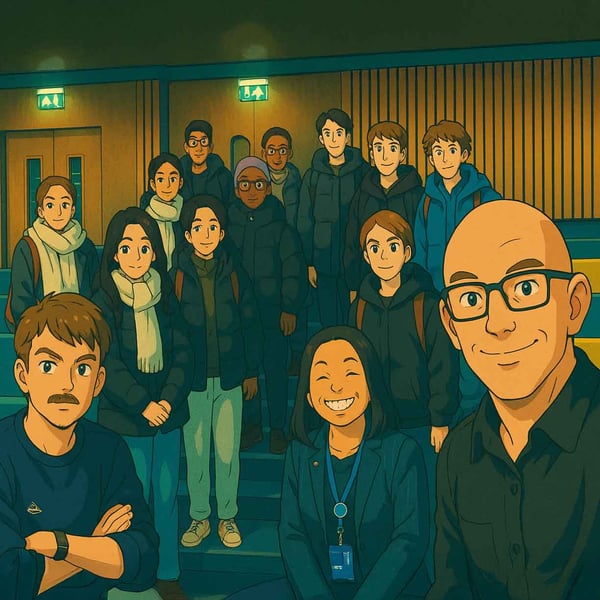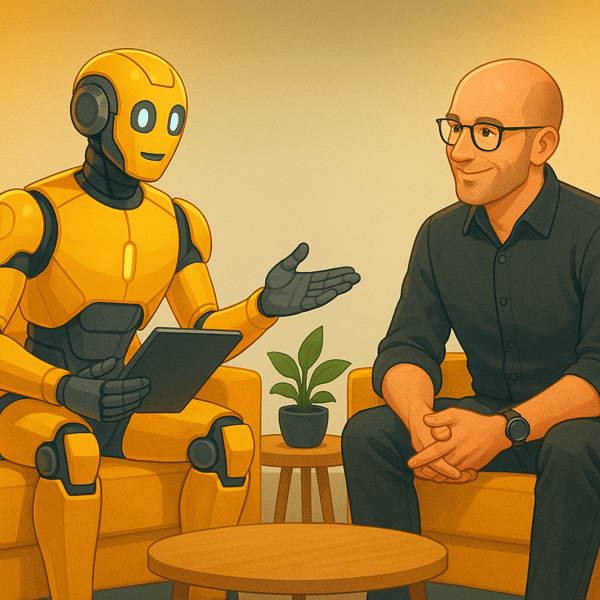

You know that voice. The one at 2am that asks the question you spend all day avoiding.
Am I enough?
I started 2025 with that voice on repeat. Lost. Confused about where I was headed, where I could add value, and whether anyone actually needed what I was offering.
Three pillars of my professional identity crumbled within months. University work dried up when the government axed Level 7 apprenticeships. A long-standing board position no longer made sense. An organisation I'd worked closely with decided to go in a different direction.
This wasn't a rough patch. This was potential revenue collapse. A business I'd built from nothing, one that had survived and thrived through COVID, was suddenly at risk. And the timing was cruel - this was supposed to be the year I kicked on. The year everything accelerated.
Instead, I was staring at having to reinvent my business, my value proposition, and my entire plan.
I kept showing up. Kept posting. Kept questioning the plan. But underneath, that question wouldn't stop: Am I enough?
The two people who bookend everything
Shari Teigman and Mark Schaefer have appeared at the defining moments of this entrepreneurial journey. The pattern is almost eerie.
In 2019, the week after I left my last corporate job, I was in one of Shari's workshops in London. It gave me the impetus and courage to go out on my own. During that workshop, I discovered Mark Schaefer was coming to Bournemouth on his Marketing Rebellion book tour.
And I thought: if I'm going to meet my marketing hero, I need to at least have a business card, and to have a business card I need the business infrastructure behind it.
That tour date became my deadline. In six weeks, I had a registered company, a website, a brand, and cards in my pocket. Strivenn was born because Shari helped me find my maverick, and I refused to meet Mark Schaefer empty-handed.
Six years later, at the start of 2025, everything was unravelling. The pattern repeated.
I started the year with a call with Shari - trying to figure out what to leave behind and what to lean into. That conversation led me to book an hour with Mark. This time not as a nervous fan, but as someone drowning and looking for a rope.
Mark listened. Then he said something I didn't expect: Stop trying to figure out the business. Double down on your personal brand. Follow your heart and your truth. The business will follow.
The man whose book tour deadline created Strivenn was now telling me to stop thinking about the business entirely. Trust yourself. Write what excites you. The rest will come.
I didn't fully believe him. But I trusted him enough to try.
Fearless exploration (or faking it)
What followed was the hardest year I've ever worked. Not because of volume - because of vulnerability.
I started writing about things I was genuinely excited about. Things I didn't have all the answers to. Things that scared me.
In April, I gave a talk at SAMPS in Cambridge on how AI was changing our customers. I was ill from travelling and scared my voice wouldn't hold out. The talk landed and my voice held out. Not perfectly - but enough.
That became the pattern. Say yes to things that terrified me. Show up and hide the nerves.
Mark invited me to speak at his Uprising marketing retreat in Tennessee. I refreshed that Cambridge talk, made it shorter, more human. It worked. An AKAM workshop at Siemens HQ led to an invitation to pitch - competitively - for a keynote at Saint-Gobain, a global construction materials company's sales directors forum. In Paris. In a skyscraper in La Défense.
I got the gig, and what an experience!
The expertise trap
Here's what nobody tells you about being called an "expert": the more you learn, the less expert you feel.
I've been introduced as an AI expert dozens of times this year. Every time, I wince internally. Because if there's one thing I've learned about AI, it's that even those making the models don't really know what's going on inside of them. And for those of us applying it? The Dunning-Krueger effect is real. The people who sound most certain often know the least. The people doing serious work are drowning in questions.
I've spent this year trying to disrupt everything I do. Asking which parts of my work should I be doing myself, and which parts should I be figuring out ways to get AI to help me. I've developed and refined the PersonaAI process. Built ways to get AI to conduct brand share of voice analysis, sentiment analysis, competitive intelligence - analyses I could never have done with a pivot table and determination.
And through all of it, I've realised something uncomfortable.
The AI needs me.
Not as the prompt engineer. Not as the automation architect. As the sense-maker. The storyteller. The connection maker. The human in the loop who decides what matters and why.
The more I've leaned into AI, the more I've discovered its limits - and my own irreplaceable value.
The moments that mattered
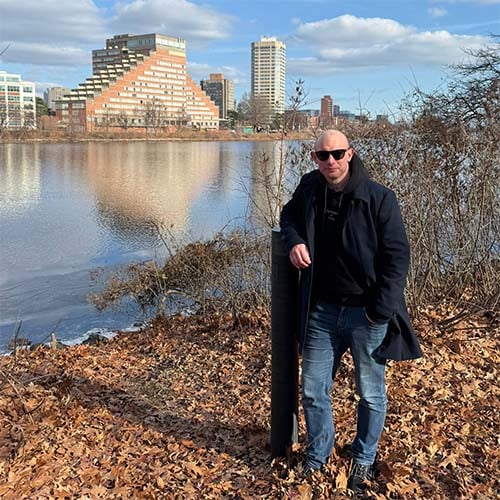
In Boston, at SAMPS North America, I opened my talk with: "The bots are coming. The bots are coming." A nod to Paul Revere's famous ride - though as I pointed out, the bots are already here and already disrupting the selling process.
The introduction that preceded me? "The man behind the bald avatar you've seen all over LinkedIn."
I laughed. But something landed. The posts were working. The personal brand thing Mark had told me about - it was actually happening, I was starting to become Known.
But the moment I'll carry into next year wasn't the talk.
Before I went on stage, a man walked up to me. He thanked me for a book I'd given him during the talk I'd given in Washington DC. Said my work had helped him.
Small moment. Seismic impact.
Because that's when it hit me. Every LinkedIn post that felt like shouting into the void. Every talk where I wondered if anyone was listening. Every article I wrote wondering if I was "expert enough" to have an opinion.
Someone was paying attention. Someone was helped.
That's the thing about building in public. You rarely see the impact. You plant seeds and walk away. And occasionally - if you're lucky - someone tells you something grew.
The paradox
I've spent 2025 trying to keep up with AI. Learning it, teaching it, building with it, writing about it.
And the lesson I'm taking into 2026?
Human connection matters more than ever.
The talks that landed weren't the ones with the cleverest frameworks. They were the ones where I tackled real human challenges. The relationships that sustained me weren't transactional. They were people who showed up and joined me on the journey.
I love working with AI. I'll keep building with it. But if I'm left with one truth from this year, it's this: the moments I'll savour aren't the automations I built. They're the humans I connected with.
At scale, on stage. And personally, one conversation at a time.
Am I enough?
I started this year asking that question like it had an answer. Like somewhere out there was a threshold I needed to cross, a credential I needed to earn, a validation I needed to receive.
I'm ending the year with a different understanding.
The question isn't whether I'm enough. The question is whether I'm willing to show up and face the challenges of the AI Era head on.
The people who ask "am I enough?" are usually the ones doing the work. The ones who've stopped asking have usually stopped growing.
So yes. I'm enough. Not because I've arrived somewhere. Because I keep walking.
If you've spent this year doubting yourself, wondering if you're qualified to be in the room, feeling like everyone else has it figured out while you're making it up as you go - I see you.
You're not behind. You're not broken. You're in the arena.
And that's enough.