Buyers rank vendors before first contact. How life science marketers can shrink the brand blind spot they cannot see.
Shownotes
94% of B2B buying groups have ranked their shortlist before they speak to a single vendor. That ranking is built from what buyers can see about your brand, and much of it you have never heard.
Who this is for: product managers, product marketers and commercial leaders at life science tools companies.
Matt Wilkinson and Jasmine Gruia-Gray start with a 50th anniversary Iron Maiden documentary that turned out to be about the fans. From there they use the Johari window to map what a brand says, what it hides and what buyers know that the brand does not. They cover how lab memory, the literature, conferences, peer collaboration and AI answers shape the shortlist, why Strivenn uses AI avatars, and why logos and familiar brand marks carry emotional equity that rebrands can destroy.
Key idea: Buyers rank you before you speak using what they see and you don't, so listen deliberately to the conversations you're not in.
What you will learn
- Why 94% of buying groups rank their shortlist before first contact (6sense 2025 Buyer Experience Report) and what that means for your website and sales team
- How the four panes of the Johari window translate into open, hidden, blind and unknown brand territory
- What the blind pane looks like in life science tools, from board-ready product pages to launches that answer last year's question
- The three mirrors buyers now judge you through: what you say, what peers say and what AI says
- Why Eddie, Iron Maiden's mascot, works as a coat hook for fifty years of fan emotion
- What Jasmine learned about customer trust living through the Pharmacia, Amersham and GE Healthcare rebrands
Chapters
- [00:46] The 94% problem
- [02:40] Iron Maiden, Mark Schaefer and a transatlantic flight
- [06:11] Eddie: one mascot, fifty years of change
- [08:17] Brands that make you part of something bigger
- [09:57] The Johari window for brands
- [12:12] What the blind pane looks like in life science tools
- [13:38] Three mirrors: what you say, what peers say, what AI says
- [15:15] Who really shapes the shortlist in the lab
- [18:53] Wearing masks: the Strivenn AI avatars
- [25:08] Coat hooks, logos and brand equity
- [28:19] Rebrands after acquisitions
- [29:41] Your brand is what people say when you're not in the room
Keywords: B2B buyer journey, vendor shortlist, Johari window, brand perception, life science marketing, product marketing, voice of customer, brand equity, AI discoverability, rebranding after acquisition, Iron Maiden, social listening
Watch the full episode, subscribe for new conversations every week and read Matt's blog "What Your Buyers See That You Cannot" at strivenn.com/thinking. Find out more about Strivenn at strivenn.com.
Transcript
In this episode of A Splice of Life Science Marketing, Jasmine Gruia-Gray and Matt Wilkinson discuss Matt's blog "What Your Buyers See That You Cannot". They move from an Iron Maiden documentary to the Johari window, explore the sources that shape a buyer's shortlist in life science tools, talk candidly about Strivenn's AI avatars and close on why brand marks carry emotional equity worth protecting.
Welcome and the 94% problem
Speaker: Jasmine Gruia-Gray [00:03]
Hey there, Matt. How are you doing today?
Speaker: Matt Wilkinson [00:06]
I'm good. How are you doing, Jasmine?
Speaker: Jasmine Gruia-Gray [00:07]
Okay, okay. Sorry that you're getting over a cold. Hopefully you have a speedy recovery.
Speaker: Matt Wilkinson [00:15]
Fingers crossed. Those pesky viruses do get one down.
Speaker: Jasmine Gruia-Gray [00:19]
Yeah, that's for sure. All right. So we're going to talk about one of your recent blogs today that really threw me for a loop because, A, I had no idea you were an Iron Maiden fan, and the way you interwove that fandom into this blog, I was quite impressed.
Speaker: Matt Wilkinson [00:45]
Well, thank you.
Speaker: Jasmine Gruia-Gray [00:46]
You're welcome. So here's a number that should make every product manager and marketing manager just a little uncomfortable. 94%. So what is that number? That's how many B2B buying groups had already ranked their shortlist first to last before they even spoke to a single vendor. In years gone by, that used to be 70%. It's now up to 94%. And that number comes from a 6sense 2025 survey of nearly 4,000 buyers. And whoever sits at the top of that list when the first conversation happens wins about 80% of the time. Think about what that means. Before your sales rep ever says hello, the buyer has already decided where you stand. They read your website, they asked colleagues, they compared you to the competition, they made up their mind, and you weren't there for any of it. So what is that opinion actually based on? Because it isn't only what you told them. Gartner found that 69% of buyers notice differences between what a company's website says and what its salespeople say. Buyers are spotting things about us that we haven't spotted ourselves. And that's what today's episode is about: the things your buyers can see about your brand that you can't. And Matt wrote about this, and he got there by way of a heavy metal band that we introduced at the beginning. Matt, give us some of the background here. How on earth does Iron Maiden lead to this topic?
Iron Maiden, Mark Schaefer and a documentary about fans
Speaker: Matt Wilkinson [02:40]
Well, I was multitasking. I was an alpha reader for Mark Schaefer's updated KNOWN 2.0. So I was reading about personal branding and the importance of fans and how you show up while I was flying across to the US. And I also happened to have a documentary open, which was about Iron Maiden, and it was relaunched for their 50th anniversary. And it was a great documentary about burning ambition. And I was looking at those two things together and that started me thinking. And so I went down a bit of a rabbit hole. But what was really interesting was that the whole documentary wasn't really about the band. If it had been, it would have been a documentary. It was actually more about the fans. And it was really interesting hearing fans from around the world talking about what the music and what being part of this group that's been built up over fifty years meant to them.
Speaker: Jasmine Gruia-Gray [03:56]
So that's a really unexpected twist. At least it would be for me, that the documentary would be more about the fans than the band itself, the band origins, some of the band members' personal stories. Was it also surprising?
Speaker: Matt Wilkinson [04:11]
I mean, yeah, it weaves both together, but there's a lot of stuff when you start looking at what did it mean for some of these things to happen. There were big, big societal changes over the last 40, 50 years, and a band that's been there when the world has opened up and been one of the first to go into some countries. It was just incredibly moving to see what it meant to those fans and to those people. And it hit me that the fans know things about the band that the band will never hear. The impact that some of those songs have on people. That's a really moving thing. There's a song called Blood Brothers, and you've got one fan saying how it brought him and his fellow veterans to tears. And so you've got this huge thing about what it meant for a group that's come out of the UK to be travelling the world and going to some of the deepest, darkest places around the world that have never seen bands from the Western world. So yeah, really, really interesting to get that perspective.
Eddie: one mascot, fifty years of change
Speaker: Jasmine Gruia-Gray [05:45]
Right. And so I think it was a little unusual at the time that the band came into its own for a band to have a mascot that they named Eddie. Tell us a little bit more about Eddie. What can marketers and product marketers learn from this mascot?
Speaker: Matt Wilkinson [06:11]
Yeah, so I think it's a really interesting device. We've seen other bands like KISS have very, very distinctive styling, and they've hidden behind the persona themselves. Iron Maiden had a different way of doing that. They've changed over the years, as we all do as human beings. In fact, the lineup has changed over the years as well. But Eddie was the face of the first releases. And the lettering for the logo has stayed the same. So they've never changed the brand logo, but for every album, every release, Eddie is in a different situation. So this device allows them to go through the years, through different changes, and put the band and Eddie into different situations, whether that be in space, whether that be Can I Play with Madness, as on the t-shirt that I'm wearing at the moment. So you start seeing a whole range of different scenarios that they're able to put this mascot into, which allows them to both convey what the song or the album is about and keep the same consistency for a logo. It started off as just an image, and it's now a full-scale animatronic that comes on stage and they fight with.
Speaker: Jasmine Gruia-Gray [07:43]
Well, they fight with it. Okay.
Speaker: Matt Wilkinson [07:45]
Well, jokingly. Yeah.
Speaker: Jasmine Gruia-Gray [07:47]
Playfully. Yeah. So it's interesting because from the way you're describing this, the mascot is almost the image of experiencing the brand. The way we talk about good marketing involves helping customers experience the brand even before they become customers.
Brands that make you part of something bigger
Speaker: Matt Wilkinson [08:17]
Yeah, absolutely. And I think it was one of those things that would signal to people. It's great going to an Iron Maiden gig. You can see people getting on the trains into London, everybody wearing the t-shirts. You might be just walking around normally and you'll see somebody wearing an Iron Maiden t-shirt and you've got something in common with them. So you feel like you're part of something, and you're part of something that's bigger than just you. The very best brands do that as well. They make you feel part of something. Harley-Davidson is a great example. Big Harley fans will tattoo the logo on themselves. Other brands maybe don't inspire the same kind of love. But I've known people that have said, if I was going to get a tattoo, I'd get one of Marmite. Personally, I don't love it, so that wouldn't be me. But you start seeing this brand affinity, and I think it's a really important thing. If you can get people to love the experience and what it says about them enough, then you're going to find that people actually start wanting to associate themselves with those marks. And that's something that advertising will never be able to get you: that sort of word of mouth marketing.
The Johari window for brands
Speaker: Jasmine Gruia-Gray [09:57]
Right, right. So you then in your blog connect the dots to the Johari window, which I have to confess I'd never heard of until your blog. Can you tell our listeners a little bit more about that?
Speaker: Matt Wilkinson [10:15]
Yeah, so it's a tool from psychology. The name itself sounds exotic, but it actually just comes from the two American psychologists' names, Joseph Luft and Harrington Ingham. It's just a compression of their two names. They drew a window with four panes, essentially a two by two. In the bottom left-hand corner is the unknown: what nobody knows yet about you, and what you don't know yet about you. On the bottom right, it's what's hidden: what you know and keep to yourself, the limitations that you admit. So if we're talking about brands, that's the stuff behind the scenes that we really don't want to let out. We've got the bit that's blind. That's what buyers know about you, what the rest of the world knows about you, but that nobody inside the building is necessarily hearing or listening to. And then you've got the bit that's open. That's the bit that's known to you, what you say about your brand, that people already believe about you. So that's really your positioning. Ideally, what we want as marketers is for our positioning to really encompass the entire conversation. But that very rarely happens. And so I think we've got to be incredibly conscious of the fact that there are conversations happening when we're not in those rooms, where we actually need to understand a little bit more about what it is that we don't know, and look for ways to find out those insights.
What the blind pane looks like in life science tools
Speaker: Jasmine Gruia-Gray [11:54]
Okay. So I think it would be helpful if you could walk us through an example of blind and help us understand from a life science tools perspective what that could look like.
Speaker: Matt Wilkinson [12:12]
Yeah, so I think every company has buyers who know things that nobody inside has ever heard. The product page reads like it was written for the board rather than the scientist. The shiny new launch answers a question that people were asking two years ago but no longer do. And so the really interesting thing is that those conversations are happening, but the organisations just haven't caught up yet. Maybe sales are hearing those messages, but what's coming back into the business isn't necessarily the objections. They're hearing something else, and it's being misinterpreted. So I think we need to be looking for those areas where we are blind to what's going on. And also, if there are areas of the business that we want to keep hidden, then actually we reduce that, because the dirty laundry is never a good look either.
Speaker: Jasmine Gruia-Gray [13:24]
So most marketing teams I know spend their energy on the top two boxes. What do we say and what do we hold back? Are you saying that that's kind of a wasted effort?
Three mirrors: what you say, what peers say, what AI says
Speaker: Matt Wilkinson [13:38]
No, I don't think it's a wasted effort, but one of the things that we need to look at is what's being said about us that we're maybe not listening to. One of the things that AI does is that it listens to word of mouth marketing. We're both friends with Sarah Neely, and she's doing a lot of work in this space. What people say about us online actually overweights what AI then says about us. So this isn't so much an AI discoverability conversation, but if our reviews are bad, if people are saying things that the AI can find and then say about us, we've got to think that people are now finding things through three different mirrors. One of those mirrors is what we put out into the world. One of those mirrors is what people already know and what they're saying to each other. And then the third is what AI says about us. If we're not paying attention to the stuff that we don't know, we're not going out and trying to find those things. And if there's stuff that we don't want people to be saying about us because we think it's a problem, we need to go out and fix those problems so that those conversations stop. That's really where I think we need to pay attention, more so now than ever, to what people are saying about us and our brands.
Who really shapes the shortlist in the lab
Speaker: Jasmine Gruia-Gray [15:15]
So that brings me back to the 94%. If the ranking happens before anyone talks to us, whose voice is really shaping that impression, especially in the life sciences, when social listening isn't really part of our repertoire yet?
Speaker: Matt Wilkinson [15:38]
Well, a lot of the perception of brands comes from the historical usage of tools within the business or the laboratory. The number of times you go and look: we last used this reagent and we bought it from this supplier, so we're going to replace it from the exact same supplier. So there's a longer memory within laboratories than the tenure of the members of the team. The chemicals that get passed from one person to another actually have a big, big impact. The memory of the previous person who studied this used these reagents. You go back and you buy the same. Yes, it's going to be a different lot, so you might have some lot-to-lot variability, but you're going to have far less variation from a little lot-to-lot variability than from going to a different supplier. So that's one place we have to be very careful. Then, if we're looking at who influences, very often it's the scientific literature. People are thinking, what are people actually writing about? And then there's what people say about us online. There have been countless issues around antibody reproducibility. There have been certain organisations that have over the years been widely criticised online, and some of those have ended up in significant trouble. And there's a bit of a furore going on at the moment about doctored images. These sorts of things impact a brand far more. I'm not saying that people don't know about some of those stories, but those stories are the things that carry on and impact the business far beyond the small domain that they actually affect.
Speaker: Jasmine Gruia-Gray [17:37]
Mm-hmm. I'd add another couple of sources as well. One is conferences: listening to speakers, or especially in the poster sessions, asking folks what instruments they use, what brand reagents they use. I think that's another extension of word of mouth marketing. And the other is through collaboration. There's a lot of science that happens over the phone, over video calls, discussing what's being used and the reproducibility that results from what's being used.
Speaker: Matt Wilkinson [18:21]
No, absolutely. When I was talking about within the labs, that's that peer network as well. Some of those conversations we can influence, some of those we can't. But we really have to be very, very conscious of influencing the conversations that are happening about us. Sometimes things that are said about us are going to be unfair. Sometimes they're going to be very realistic, and they're things that we can learn from and look to improve upon.
Wearing masks: the Strivenn AI avatars
Speaker: Jasmine Gruia-Gray [18:53]
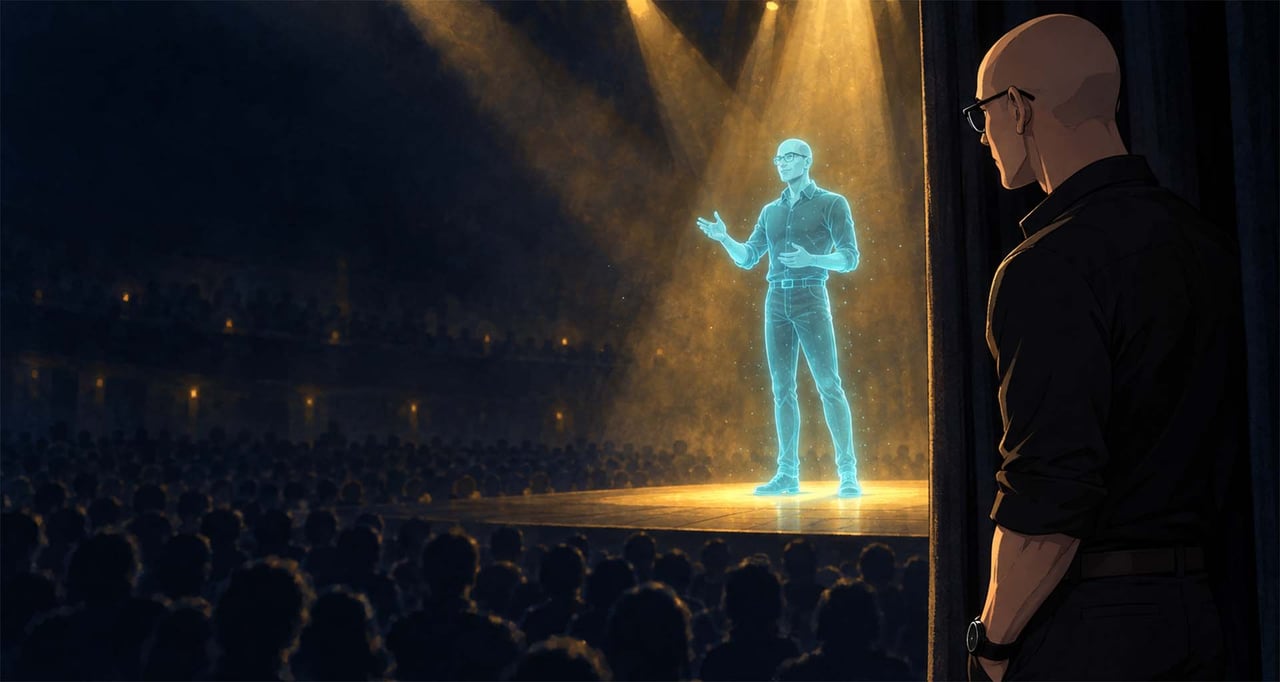
Right, right. So I want to pivot us a bit to your personal brand and to Strivenn, where your face isn't on your own blog. Neither is mine. It's an AI-generated cartoon. And on almost everything Strivenn publishes, we use these cartoon images. You're writing about brands hiding from their buyers while we're both wearing masks. How do we think about that?
Speaker: Matt Wilkinson [19:27]
Well, my AI avatar's better looking than me for once.
Speaker: Jasmine Gruia-Gray [19:30]
Stop.
Speaker: Matt Wilkinson [19:32]
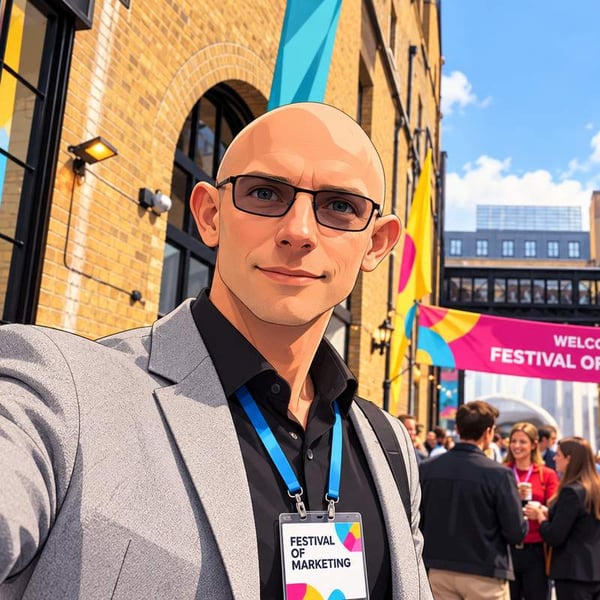
But I think it came as a fun device. It started as a fun device for a talk I gave, I think it was April last year, in Cambridge at Wolfson College at a SAMPS event. It started when you could start creating really decent imagery using AI. Trying to create an image for every blog, or buying an image, stock photography, is expensive. So I could generate something. And this was a way to be a little bit more visible than I would have been otherwise, without having self-indulgent selfies everywhere. So that was really where the avatar came from, the idea behind it. Yeah, it's something easy to hide behind, and I own that completely. But at the same time, it's also trying to be as recognisable as possible and as close to human as possible. I've had people come up to me at trade shows that recognised me because of the avatar. So as long as it's close enough, I don't think it's such a big issue. It does allow me to be a little bit less inhibited, shall we say, online than perhaps otherwise. And for me that's a fun thing to do. It's also fun to be giving a presentation and have a way to be a little bit creative with the images you can create. The other side of this is that I want to be able to unleash some of that creativity. I'm not a designer, and writing a blog every week, if I was to commission things, that would get prohibitively expensive. So being able to create something is important. And on the other side of that, if I'm going to create something, I believe it's important to make it look like it's been created, which is why it's an obviously cartoon avatar rather than something that's realistic looking. And if ever the AI gets too realistic looking, I go back and try again. So that's really the rationale behind it. But I do try and post selfies as well when I'm out and about, and I do try and make sure that there is enough of me around that it's obvious that it's an AI avatar. It's a bit of fun.
Speaker: Jasmine Gruia-Gray [22:32]
Yeah, I think that's important, because I think the fun part is what I'm enjoying about creating the avatar in different scenes. It pokes a little bit of fun on most of my blogs, which are very, very serious topics. And like you said, it's a way for me to unleash my creativity a little bit, pulling the theme of the blog through into another type of medium.
Speaker: Matt Wilkinson [23:05]
Yeah. And I think that's the trick, isn't it? It's a little bit of visual storytelling that, if you were going to go out and look for stock photography, you'd never be able to accomplish on a weekly basis. And we've seen it across the life sciences where the same image has been used time and time and time again, and you see the same image on four or five different vendors' websites, and you go, well, that's a bad look. Now, I'm sure most customers don't necessarily spot that. But I look at it and go, you know what, that's not where I want to be. And so being able to unleash a bit of creativity, being able to have an idea that, while not a hundred percent unique, is at least recognisable, I think is an important device. I've seen others across the life sciences every now and again create little cartoons of themselves, but nobody's been as consistent as we have. Every week there are two blogs and a podcast that go out with an AI avatar image on them. And I think that's something to be proud of. It's been nearly eighteen months, two years since those avatars were created, and they've travelled the world.
Speaker: Jasmine Gruia-Gray [24:36]
Right. A little bit of Where's Waldo? Yes.
Speaker: Matt Wilkinson [24:40]
Yeah. There was Boston last year when I gave a talk. There was an avatar outside in Boston. There's going to be one in California later this year. There was one from London and Marketing Week just last week. So all of these places, I think it's just really important to have a device that follows you and that can be a bit of fun.
Coat hooks, logos and brand equity
Speaker: Jasmine Gruia-Gray [25:08]
Okay, so let's round up our discussion. What advice would you give our listeners on what they can take away from your blog and what they can actually use tomorrow morning?
Speaker: Matt Wilkinson [25:25]
Yeah, so creating a brand in a number of organisations is a big question, so maybe it's not something you can do tomorrow morning. But the thing that's really important is to have something that we can attach our emotions of experience to. Hopefully our clients have a great experience and they attach it to those. Hopefully people that read the content and engage with us through the blogs or the podcast have a great experience and feel that they've come away having learned something. That's the goal. As I'm exploring the world, I'm trying to share what I'm learning and save people a bit of time. It's about having a device that we can ascribe something to. It's a bit like a coat hook. We can hang the emotions on it, just like you'd hang a coat on it. That's why people get upset when brand logos change. Because they've hung emotion on them. That's something they've already emotionally bought into, and that's irrational. We might think that we need to modernise something. We may get bored of our message. We may get bored of the design language. But that familiarity is something that customers love. If we look at the superhero movies, we're still going back to Batman and Spider-Man time and time again. There are things in those characters that we love seeing retold and reshaped. I know of three different actors that have played Spider-Man. We've seen that origin story time and time again. Does it get old? No, because there's something about that look that's important to us. And I think that's where brand logos come in. We have to be really careful when we're looking at brands to make sure that we hold on to the elements that people ascribe equity to. That's something we just have to be really, really conscious of. And unless we do a really good job of understanding our customers and getting into their heads, what's going to be in that blind spot is going to be a really, really big unknown box. We need to try and make that box as small as possible so that we can represent, as best as possible, what our customers think and say and want us to be.
Rebrands after acquisitions
Speaker: Jasmine Gruia-Gray [28:19]
Yeah. Super, super points. And I'd like to add to that: when you have acquisitions and there's an opportunity to do rebranding, I think taking that strategy slowly and very carefully, and asking really, really good questions, is super important. I was part of Pharmacia Biotech and Amersham Life Sciences when they merged and became Amersham Pharmacia Biotech, AP Biotech, Amersham Biosciences, eventually GE Healthcare. And each time the logo changed, the brand story changed, but we were left in positions trying to convince customers, no, no, no, everything's going to be as it was. You can still count on us, you can still trust us. Yet all the change was happening right in front of them visually. So it's a good lesson, I think, for marketers who are going through that now or will be going through that, to think through those changes very carefully, because customers do watch and do question.
Your brand is what people say when you're not in the room
Speaker: Matt Wilkinson [29:41]
Yeah. And I think there's a great quote from Jeff Bezos: your brand is what people say about you when you're not in the room. We can't get into all of those rooms, but we can do a better job of listening to what people are saying on social media now, for example. As we discussed in the fantastic conversation with Brooke Sellas, that sort of approach, I think, is just so critical now.
Speaker: Jasmine Gruia-Gray [30:14]
So I'd like to round up by encouraging our listeners, if you want the full map, the Johari panes, the three places the buyer leaves your building and the Eddie story, to read your blog titled "What Your Buyers See That You Cannot" on strivenn.com/thinking. Thanks again for a great episode, Matt.
Speaker: Matt Wilkinson [30:40]
Thank you, Jasmine.
Speaker: Jasmine Gruia-Gray [30:43]
And thank you all for listening to another episode of A Splice of Life Science Marketing. Bye for now.
Speaker: Matt Wilkinson [30:50]
Bye.
Q&A
How do I hear what buyers say about us when we have no social listening budget?
Start with the sources already in reach. Ask two field application scientists to log every unprompted comment about your brand for one week, verbatim. Search your product names alongside "problem", "alternative" and "reproducibility" on ResearchGate, Reddit and PubPeer. At your next conference, have one person spend an hour in the poster session asking which reagents and instruments people use and why. Put everything in one shared document. That document is the first draft of your blind pane.
Sales tells us we lose on price. How do I test whether that is the real objection?
Price is the objection buyers find easiest to say out loud. Pick three recent lost deals and ask a colleague outside sales to call each scientist for fifteen minutes. Ask what they compared, who they asked and what made the winner feel safer. Record the exact words. If the answers mention lot consistency, a colleague's recommendation or a paper, your problem sits upstream of price and your sales team has been translating it before it reaches you.
What should I check about how AI tools describe our brand?
Run the questions a scientist would ask when building a shortlist through ChatGPT, Gemini, Claude and Perplexity. Ask which suppliers are best for your core application, what the known issues are with your product and how you compare with your two closest competitors. Note which sources each answer cites. Where a review, forum thread or old paper keeps appearing, that source is shaping your ranking. Repeat monthly with the same prompts so you can see whether anything moves.
Our website and our reps tell different stories. Where do I start?
Pick your highest-revenue product and put three things side by side: the product page, the current sales deck and a recording or notes from a real sales call. Highlight every claim, number and benefit that appears in one and is missing or different in another. Bring the list to a thirty-minute meeting with one rep and one product manager. Agree the single version of each claim, fix the page first and send the rep the updated wording the same day.
We are going through an acquisition. How do I protect the equity customers have in our brand?
Before anyone touches a logo, find out what customers have hung on it. Interview eight to ten loyal users and ask what they would miss if the name disappeared and what would make them check alternatives. Map the answers to specific marks: catalogue numbers, product names, packaging, the logo itself. Keep anything that carries trust visible for as long as possible, and tell customers what is staying the same before you tell them what is changing.