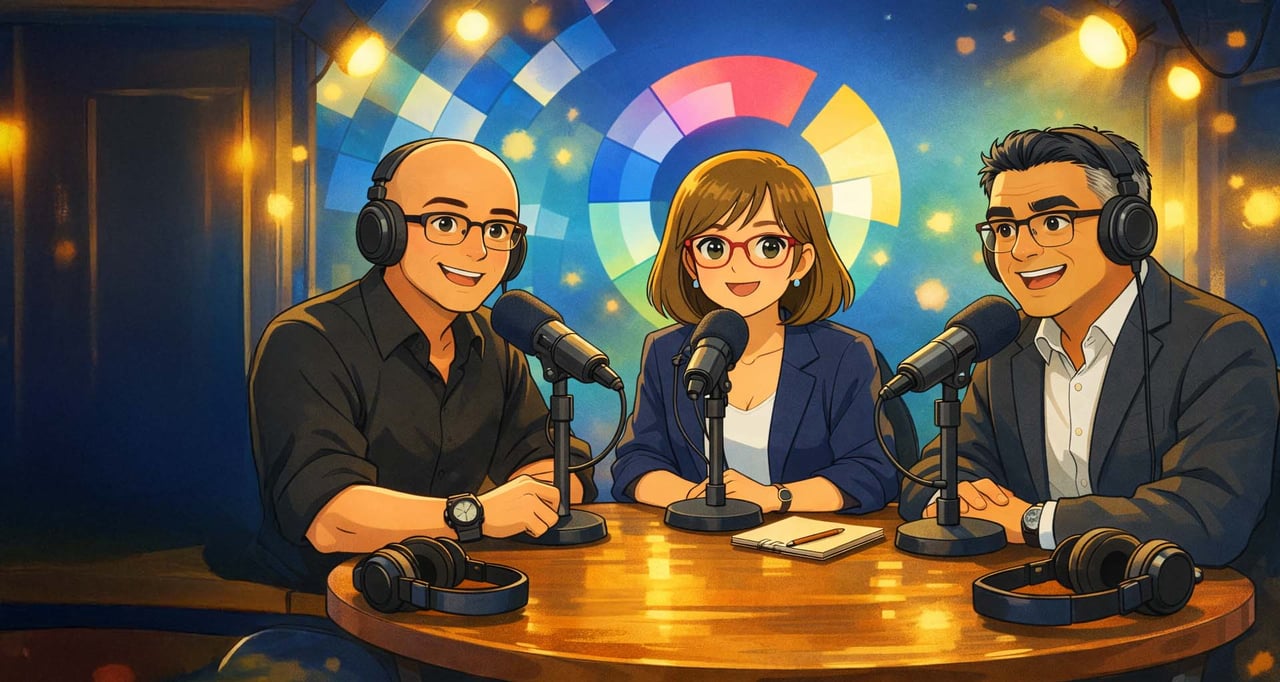
On January 20th, Jasmine and I joined Sanj Kumar, CEO of ELRIG, for a webinar unpacking our survey of 107 exhibitors at Drug Discovery 2025. We covered the conference preparation gap - that uncomfortable reality where 86% of exhibitors lack competitive battle cards despite pinning lead generation hopes on expensive booth investments.
What we uncovered should worry any leadership team funding events as a growth channel.
Our survey uncovered an uncomfortable truth, that preparation gap is a silent value leak. When booth teams can't diagnose, differentiate, or redirect in real time, conferences don't just underperform. They actively distort ROI, inflate follow-up noise, and send sales teams back chasing the wrong leads.
We were asked some excellent, and uncomfortable, questions during the session. We didn't get to answer them all live, so below we've captured the most actionable answers for teams who want their next conference to produce signal, not just scans.
Battle Cards: Your Three Critical Elements
The Question: We're in that 86% without battle cards. What are the 2-3 most critical elements we should include if we're creating our first one before our next conference?
Jasmine explained the STAR framework during the webinar:
STAR being:
- Situation assessment - asking what are they currently using, what's working well, what's not working well, what's driving them to look for alternatives.
- Targeted differentiation - pick one or two things that matter to the person in front of you.
- Acknowledge the competitor's strengths. You don't have to bash.
- Reframe around your value - bring it back to what outcomes that client is trying to achieve.
Sanj reinforced why this matters:
"This can only be done face-to-face. This is where you use your listening skills to really understand the needs of customers and then position your products, your company, towards those needs. Never disrespect, never bash the competition. You'll just lose trust and credibility."
Your three critical elements:
1. Pain point addressed - What customer problem does your solution solve better than alternatives? Frame this as outcomes, not features.
2. Targeted differentiation points - Two or three specific areas where your value proposition is strongest. Include the question prompts that reveal whether this matters to the prospect in front of you.
3. Competitor acknowledgment + redirect - Brief, respectful acknowledgment of competitor strengths, followed by strategic reframing to where you win.
Keep it to one page. Make it something booth staff can review in 10 minutes before a key conversation.
Using AI to build your battle cards:
This might sound like a lot of work, but AI can be a brilliant assistant here. Identify the key product lines you need to address and ask AI for help.
Example prompt framework:
|
|
Role & Context Task Inputs:
Include the following sections:
Format & Tone
Avoid pricing claims, deep technical detail, or assuming active competitive evaluation unless surfaced in conversation. |
Pro tip: |
|
Don’t treat the AI’s first output as final. Explicitly challenge it to explain why it made certain positioning choices, what assumptions it’s relying on about buyers and competitors, and where the guidance could break down in real conference conversations.
The second pass is usually where the battle card becomes usable instead of generic. |
Being Memorable: Beyond Personalised Discussion
The Question: How best to be memorable, other than personalising the discussion? Can you give examples that have stuck out for you?
I shared my favourite example from the webinar - a company called Artel that sold pipette calibration systems:
That sounds pretty boring, right? But they created a challenge on the show floor - the pipetting Olympics. If you got a certain score dispensing liquids, you'd go away with a gold, silver or bronze award. There were seas of people going around conferences wearing these awards, and people would say, hey, where did you get that? That would then drive more booth traffic. They were known as the people that stood for precision droplet dispensing.
Jasmine emphasized the human element:
It's about being human. It's using your personality to make things memorable and having that very human and humane conversation with that other person. It's not about can I scan your badge - it's about bonding over the pain point that prospect is having.
The pattern: Memorable experiences link directly to your core value proposition, create social proof, and give attendees something to talk about beyond your booth. Don't just give away something - give them an experience that demonstrates what you stand for.
Reframing Product-Focused Messaging Into Memorable Value
The Question: You mentioned 49% of exhibitors focus on what we deliver rather than brand or value. Can you give an example of how to reframe a product-focused booth message?
Our survey revealed this gap vividly. As Jasmine noted:
Nearly half focused on functional categories: how compact the instrument is, or innovative solutions for drug discovery. These are features. This isn't differentiation, and this is certainly not connection to prospects' pain points.
Before/After Examples:
Product-focused: How compact and easy to use our instrument is
Value-focused: Fit LC-MS precision in half the bench space - because your lab is already overcrowded
Product-focused: Innovative solutions for drug discovery
Value-focused: Shorten your hit-to-lead timeline by 40% without adding headcount
Product-focused: We're here to help
Value-focused: Your CRO missed three deadlines. We've rescued 47 projects like yours.
The shift isn't subtle language tweaking, its shifting the frame from what your product is to the value your customer receives and the pain that is solved. You need to frame your booth messaging so that it is memorable even after someone has walked past 200 other booths.
Restructuring Your Booth Team
The Question: How should we structure our booth team differently to deliver expert consultations and demos if we typically only send sales and field application specialists (FAS)?
Our survey found that expert consultations (44%) and live demos (30%) drive post-event action. But here's what we found on the exhibition floor:
Between us, we spoke to more than 100 exhibitors, and the number of marketers were few and far between. Marketing has been pushed into more of a coloring in department. There's not necessarily anybody on the booth that's really tasked to understand and get a sense of what's happening in the market.
Jasmine added:
Back in the day, as a young marketer, that's how I cut my teeth at conferences. There was huge value in understanding what questions we were being asked, and then reporting back in a debrief and sharing that information with the next group going to the next conference. Word of mouth market intelligence can't be replaced with website searches and just sitting in your office.
Core booth team:
1 Marketer - for intelligence gathering, positioning insights, competitive dynamics
1-2 FAS - for technical depth and product demonstrations
1 Sales lead - for deal progression and executive introductions
If you can only afford three people at the booth, make one of them a marketer who can synthesize intelligence that informs the next six months of positioning. Schedule product managers and executives for specific time blocks rather than parking them at the booth all day.
Capturing Booth Conversations for Follow-Up
The Question: How do you capture booth discussions so the conversation doesn't end there?
Sanj offered practical advice that works:
Please take business cards. Take a clipboard with a piece of paper and a pen. Capture the notes on paper. You can still scan if you wish, but I would always put it on paper - you never know when the WIFI will fail, or an outage occurs.
He also pointed to LinkedIn:
LinkedIn has a great tool - you click in the search bar, there's an icon on the right, and you can scan somebody else's QR codes or they can scan yours.
Jasmine added the AI option: Plott, Otter, or Fathom can record and transcribe conversations in real time for later personalization.
Critical GDPR note: Any data capture method requires explicit consent. Before writing or recording anything, ask for permission and ensure your data protection protocols are followed.
A Simple Operating Model for High-ROI Conferences
The teams that escape the 86% don't do more. They do a few things in sequence, deliberately:
- Prepare (Before the show)
Battle cards built around customer pain, not product specs.
Booth messaging framed around outcomes someone cares about later. - Engage (On the stand)
One genuinely memorable experience tied directly to your core differentiation - not swag, not scanning. - Diagnose (In the conversation)
A marketer on the booth listening for patterns: objections, language, competitive pressure, unmet needs. - Convert (After the show)
Follow-up informed by what was actually said - not a generic nurture stream triggered by a badge scan.
Break any link in this chain and conferences revert to theatre. Execute all four and they become one of the highest-signal growth environments you still have.
Where This Leaves You
Conference preparation isn't about perfection across every dimension. It's about escaping the 86% who show up acquisition-focused but preparation-poor.
As Sanj said: Prepare. Prepare. Prepare.
Start with battle cards - use the AI framework above. Reframe your booth messaging from features to outcomes. Put a marketer on your booth team. Make the experience genuinely memorable.
Your next conference is your next opportunity to stand out. Don't waste it blending in.
You can access the full report, by clicking the button below.