
Your best account manager hands in her notice on a Tuesday. Within a month you have the handover pack: three hundred contacts, a clean renewal history, a contact map colour-coded by relationship strength. None of it tells her successor that the procurement director will not sign anything that increases single-supplier exposure. She was burned by a consolidation programme in a previous role and mentioned it once, over coffee, in 2023 and made sense of every negotiation you ever had. That fact lived in one head and it has just left the building.
CRM systems preserve transactions. People preserve meaning.
You rent most of what you know
Every business believes it owns its customer knowledge. Most of it is rented from the memories of individual employees, and the lease ends the day they resign. The systems hold what happened. The person held why it happened, and what might happen the next time consolidation comes up.
Nobody notices, because the loss is invisible. There is no empty field in the CRM where the reason used to sit. The successor inherits a complete-looking picture and works from it confidently for eighteen months before anyone realises what is missing.
Preserve the evidence, not the impression
The first step is to preserve what the buyer actually said. Interview transcripts, service review notes, the objections that stalled the last two expansion attempts, the language that buyer uses about their own risk. AI can then turn that evidence into a model you can question later, which is what I call a grounded synthetic buyer.
Grounding is the whole argument. A model built on average internet text is a contact map that talks. A model built on your evidence starts sounding like the specific, difficult person you are about to sit across from. AI raises the cost of pretending you know a customer you have not actually listened to.
Which means the source matters more than the technology. Her interpretation of what procurement wants is one input. What procurement was recorded saying is the evidence the model should be built on.
What the successor actually inherits
Go back to that handover pack. Get the distinction right and the successor inherits more than a list of who matters. She can ask why they matter. What does procurement fear? What has derailed this relationship before? How does the technical lead describe risk? Which objections came directly from the customer, and which are our own interpretation?
That is the difference between transferring account data and preserving customer knowledge.
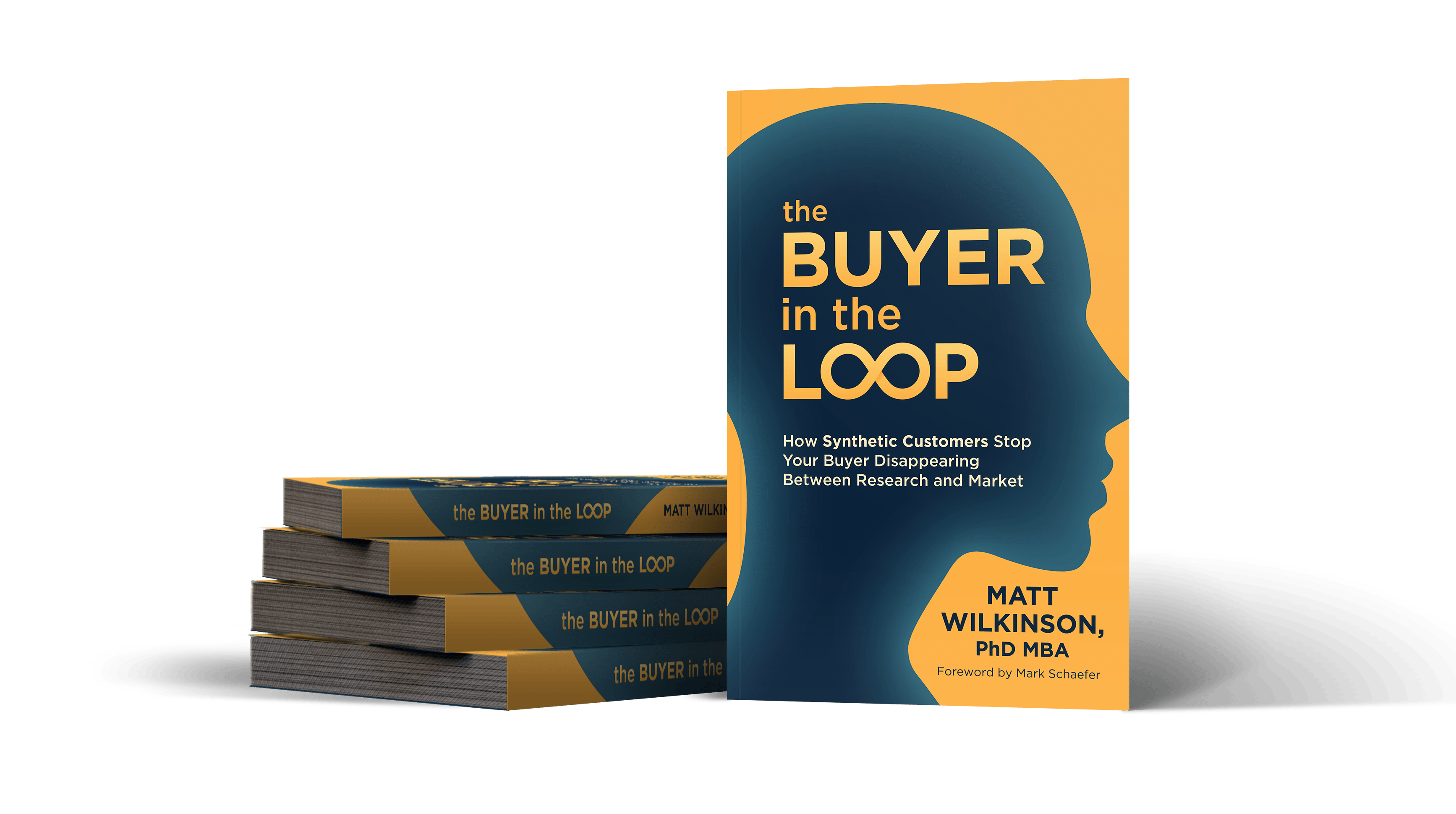
I have written the long version of this argument in the AKAM Bulletin, Q3 2026, where I also cover why most account teams have real depth with two people out of a buying group of eight, and how organisational gravity pulls the account plan toward internal consensus long before the customer ever sees it. I cover organisational gravity in more detail in this Forbes article and in my book The Buyer in the Loop.
If you are wondering how much buyer knowledge in your own organisation lives in systems, and how much still lives in people's heads, that is one of the things I diagnose with leadership teams. You can book 30 minutes with me by clicking here.