
Two minutes into a first Teams call with someone I have never met, I am sat staring at an empty chair.
Ruben Pastilha had stepped away to refill his water. Ordinary enough. But the chair sits in the middle of my screen and my mind goes to a story about Jeff Bezos bringing an empty chair to meetings.
Almost nobody copied it
In Amazon's early days Bezos added a chair to the meeting room and told the executives it belonged to the customer, the most important person present. Bill Price, Amazon's first global vice president of customer service, says he sat in the first meeting where that chair stayed empty. The reason Bezos gave was blunt. The customer doesn't come to our meetings, so we have to remember that everything we do is to serve them.
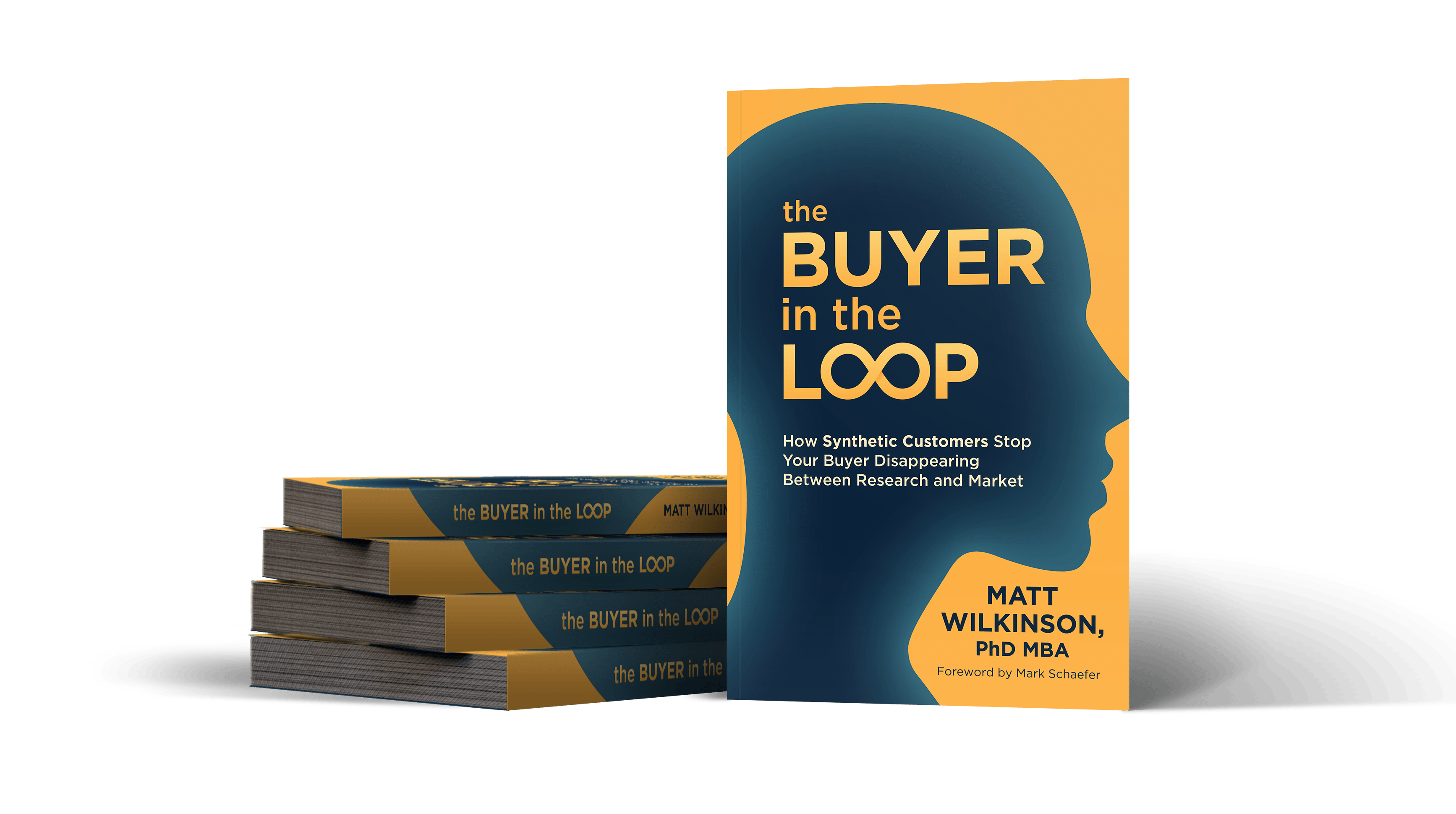
My friend Anna Zgadzaj reminded me of that story a few weeks ago while we were talking about some of the ideas in my book, The Buyer in the Loop.
Look at what that idea has going for it. It costs nothing. It takes ten seconds. It comes endorsed by the company that built its whole reputation on customer obsession.
And it has been conveniently forgotten. In fifteen years of walking into life science meeting rooms I have never seen a company leave a chair for the customer. I have never seen any reminder of the customer in the room at all. No chair, no photograph, no name on the agenda.
You already have an empty chair
No one makes sure it's there to represent the customer, not because chairs are a scarce resource. But because a chair sitting there all meeting is an accusation. A physical object in the room saying that the person whose money you are chasing has no idea this conversation is happening, and that most of what you are about to decide is a guess. Nobody wants that in their eyeline at nine on a Monday.
So the chair never arrives. And here is the part worth sitting with: the customer is absent from that meeting either way.
The empty chair is already in the room. You just cannot see it, because nobody dragged one in.
That was the whole trick. Bezos did not solve the absence. He made it impossible to ignore.
An empty chair cannot argue
Even visible, the chair only gets you so far, because it agrees with everybody.
Everyone in that meeting is already representing the customer. They are just representing their version of what they have experienced. The product lead pictures the user who asked for the feature during the last focus group. Marketing remembers the segment in the launch brief. Regulatory recalls the most litigious customer they have ever met. The CEO calls to mind whoever complained loudest last quarter. Everyone says they know their customer. Then product, marketing and sales all describe someone different.
None of them are lying. All of them are answering from their personal lived experiences, and an empty chair hands every perspective equal standing.
You filed your buyer
You are not short of insight. You have the voice-of-customer study, the win and loss notes, the interview transcripts, a CRM full of what actually happened.
Your last voice-of-customer study attended one meeting. The one where you presented it.
I have been on the other side of that more times than I care to count. Running the interviews, writing the report, presenting the findings, then watching the buyer thin out through each approval round until the launch copy describes the company. Nobody in that chain is careless. The people furthest from the buyer hold the most approval authority, so the words get adjusted for their comfort rather than the buyer's recognition. I call that organisational gravity. Pushing harder against it achieves nothing, because the force is structural.
Customer data is a photograph. Buyer presence is someone answering back when a reviewer wants a paragraph about your company heritage included.
Make the chair argue back
This is what I told Ruben. You can fill the chair now, and you do not need anyone's permission to start.
Take the evidence you have already paid for. The interviews. The objections that kill your deals. The language buyers use in a forum and never to a salesperson. Build a queryable model of the buyer on top of it, grounded in your research and nobody else's, then put it where the decisions happen, inside the assistant your team already opens every morning.
Stop treating it as a reference document and give it a job. Sit it on the review panel. Point it at the landing page. Run the launch narrative past its objections a month before a customer does it for you in a lost deal.
It answers back. Everything else follows from that.
The sceptics are right
Now the objection, and it is the strongest one going.
An AI model of your customer could be the same guess with better production values. You picked the evidence. You built the thing. Now it agrees with you fluently, and you have manufactured consensus where you used to have a question.
The Market Research Society and ESOMAR have spent the past year defending the need for customer research, fighting back against synthetic data - and for good reason. Ungrounded models hallucinate badly in specialist domains and flatten the differences between the people they claim to stand in for. Prompt a general model to play a buyer type and you get something articulate and average, which your competitor can readily reproduce.
But grounding gets you a different result. A model built on your own research gives answers you can trace back to a specific interview or a specific lost deal, so you and your colleagues can argue with the evidence you already invested in rather than with your taste.
Pressure-test with the synths, then go back to real buyers before you commit to anything that costs money.
Never stop talking to real people.
Ruben came back
He came back to his chair, and we spent forty minutes on things no large language model would have raised. What it feels like to finish a doctorate with no idea which door to walk through. The odd position of sitting between science and commerce, where the value is obvious and the introduction is impossible. He asked who he should be talking to. I asked what he needed. We both left with names to find for each other.
That part the technology does not touch, and it is why I am careful about how I frame any of this. The chair was always a reminder that the person could not be there.
Bezos dragged in an extra chair because there was nothing available to put in it, but now there is a way to make the chair work for its space in the meeting room.
You have no such excuse. And most of you have not even dragged in the chair.
The Buyer in the Loop is about what happens to your buyer between the research and the market, and what to do about it.