Your buyer can see something about your brand that you cannot. Every buyer can. Most companies never find out what it is.
I have been chewing on that since watching Iron Maiden: Burning Ambition, the band's 50th anniversary documentary. I have been a Maiden fan for nearly 40 years, and I expected nostalgia. Instead, the film spends most of its time with the fans. The director said the project started with the fans. After watching it, I think the band's whole career did too.
Eddie made the band more visible
In February 1980 a snarling, half-rotted face appeared in silhouette on the cover of the single Running Free. Two months later Derek Riggs's full Eddie stared out from the debut album. Manager Rod Smallwood wanted one figure who would stamp his presence on the band, and he insisted Eddie appear on every piece of artwork.
It worked. Maiden built a global following with very little help from radio or MTV, and Eddie became one of the most recognisable brand assets in music.
Eddie never replaced the band. Bruce Dickinson piloted the band's own jet, wrote a bestselling memoir, launched a beer and built a speaking career on turning customers into fans. The mascot carried the consistency. The humans carried the conversation.
Yes, I use an avatar
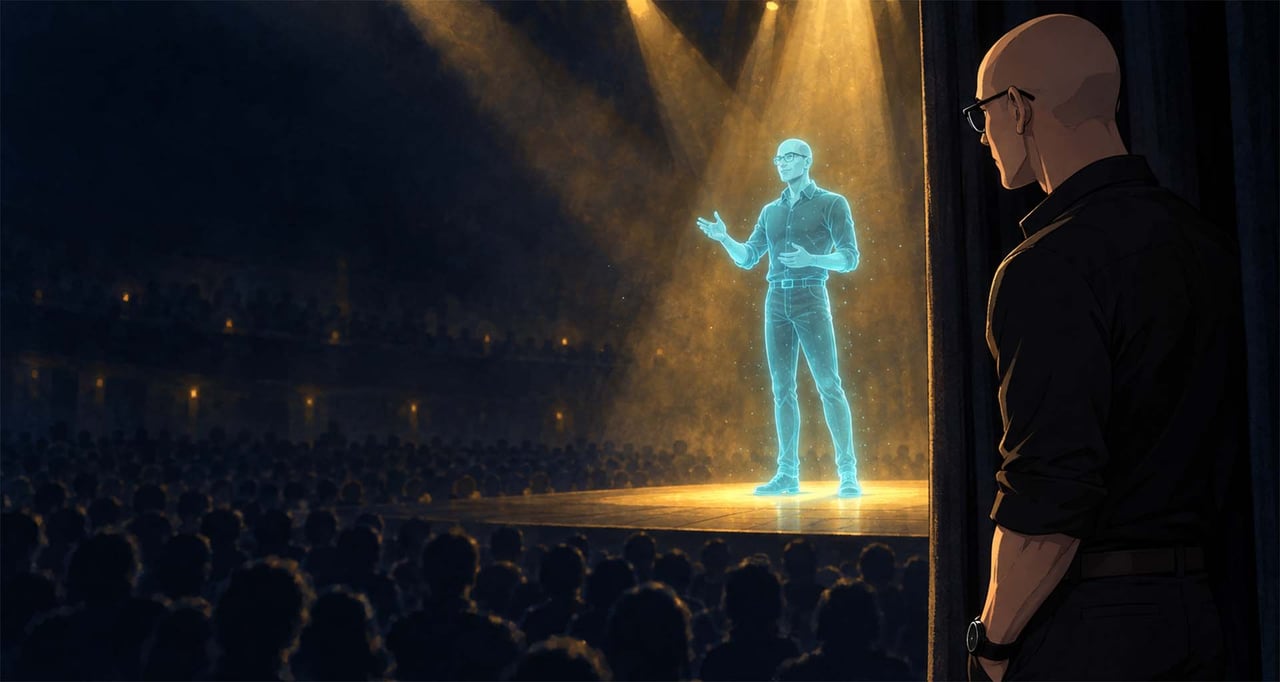
If you have read anything on this site, you have met mine and seen it in the image above. An illustrated, AI-generated version of me turns up on most of what Strivenn publishes. I like him. He is consistent, he never needs a photographer, and I think he is more photogenic than I am.
He also makes hiding easy.
Anonymity changes behaviour. The psychologist John Suler called it the online disinhibition effect: remove the face and the accountability, and people say things they never would in person. Internet trolls are the ugly version. The corporate version is quieter: nobody ever has to say what the company actually thinks.
So I use a simple test. Does the avatar point back to a person you can argue with? Eddie did. Mine has to.
Your brand has four windowpanes
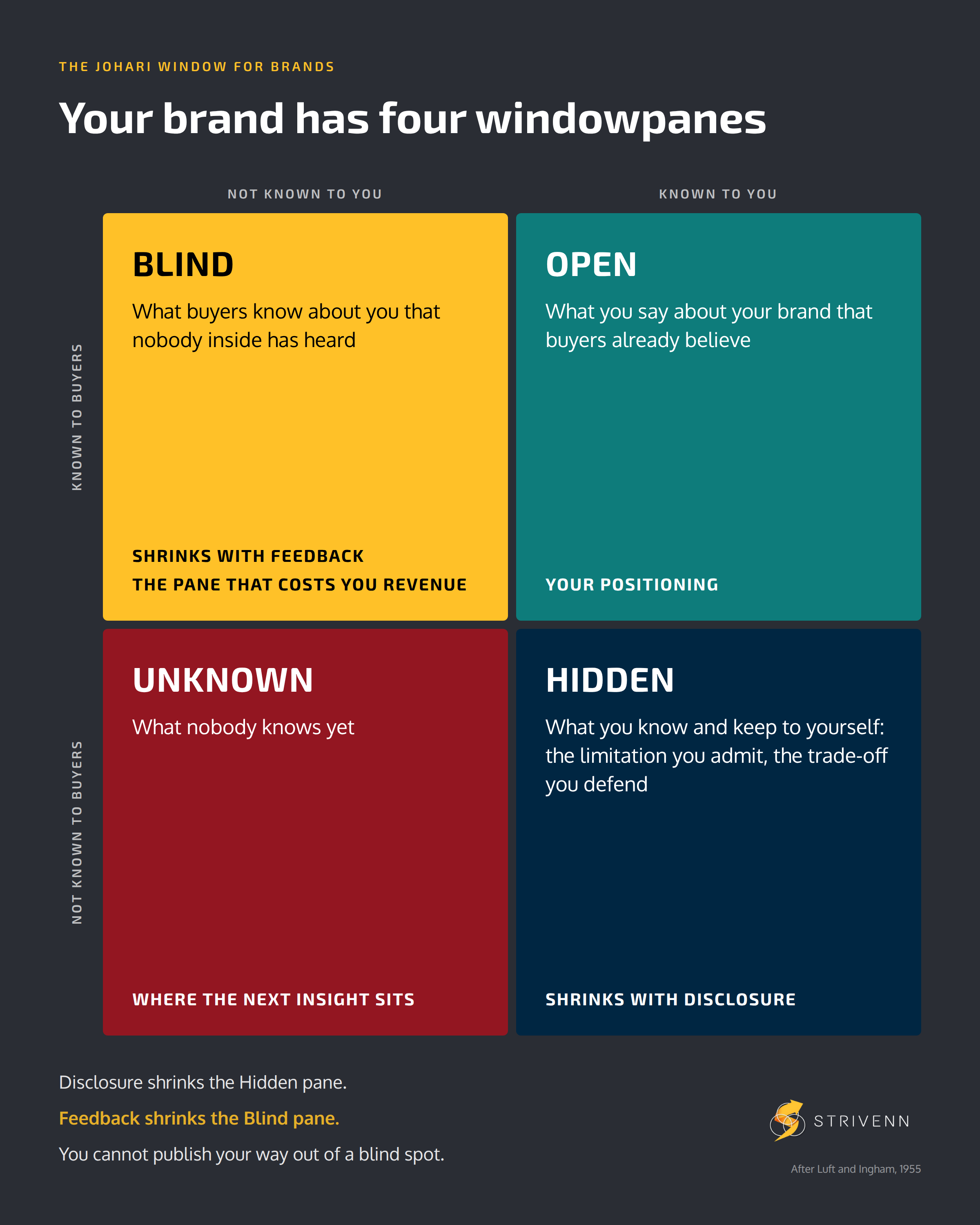
In 1955 two American psychologists, Joseph Luft and Harrington Ingham, drew a four-pane window to explain how people understand each other. They called it the Johari window, blending their first names. Open is what everyone knows about you. Hidden is what you know and keep to yourself. Blind is what others see and you cannot. Unknown is what nobody knows yet.
“A centipede may be perfectly happy without awareness; but after all, he restricts himself to crawling under rocks.” Joseph Luft
Most brand work lives in the top two panes, deciding what to reveal. That is disclosure, and it matters. The material people connect with usually sits in the Hidden pane precisely because it feels risky to share. The limitation you admit. The trade-off you made and are willing to defend.
But the pane that costs you revenue is the one you cannot see.
Your blind spot is the buyer
Every life science company I work with has buyers who know things nobody inside has heard: that the product page reads like it was written for the board, or that the new launch answers a question they stopped asking two years ago.
That knowledge rarely travels. The buyer exits in three places: at inception, when the customer becomes a slide; at launch, when marketing writes from the inside out; and at the pitch, when sales meets the customer cold. Each exit widens the Blind pane.
Much of that knowledge sits in public. On our podcast, Brooke Sellas made the case that negative conversation is where change starts, and that listening to competitors shows you complaints their customers would never bring to a vendor. But as I wrote in Your Listening Programme is Feeding the Wrong Machine, organisational gravity softens that evidence on its way to the people who approve decisions. The Blind pane can stay blind even after you have paid to look through it.
It gets worse, because most of the people judging you never meet you. The 2025 Edelman-LinkedIn B2B Thought Leadership Impact Report found that 71% of "hidden buyers", the stakeholders in finance, legal, procurement and operations who shape the decision, have little or no interaction with sales.
Read that as a Johari problem. A committee you will never sit across from is forming a view of your brand from what you publish, and that view never reaches you.
That makes the Blind pane a question of power as much as research. Your buyers already decide what your brand means in lab meetings, procurement calls and AI chats you will never see. Meanwhile, the people inside your building with the most approval authority usually sit furthest from them.
Feedback is the only fix
Luft and Ingham were clear about the mechanics. Disclosure shrinks the Hidden pane. Feedback shrinks the Blind pane. You cannot publish your way out of a blind spot.
That means putting the buyer back into the room at the moments that decide things: the brief, the stage gate, the launch message, the pitch rehearsal. Real interviews do that best, and you should never stop running them.
Grounded synthetic customers, built from that real evidence, let teams consult the buyer between interviews, at the speed decisions actually get made. Grounded means every trait traces back to evidence: interview transcripts, sales calls, win/loss notes and buyer language. A model built on averaged internet data gives you a buyer your competitors can build too. Synthetic for directional, human for decisional.
You probably already run win/loss analysis, advisory boards and NPS, and those programmes talk to real buyers with more authority than any model. Their weakness is timing. Win/loss explains a decision after it is made, and advisory boards meet quarterly, while positioning gets decided on a Tuesday afternoon in a meeting nobody planned. You need buyer truth while the decision is still being shaped.
Maiden understood this long before anyone had a word for it. Fifty years of touring is fifty years of feedback, and much of it came from fans talking to each other. Life science buyers do the same, and that word of mouth now shapes what AI assistants recommend. The band read the crowd every night and responded to it.
Eddie still points at the band
Eddie has sat on nearly every Iron Maiden cover for more than four decades. He works because a band stands behind him that still plays to the crowd and still listens to it.
Your brand will always wear some kind of avatar: a logo, a tagline, a positioning statement polished by multiple reviewers. That is fine. The danger is the Blind pane, where your buyers already hold an opinion you have never heard.
So look at your current positioning and ask which pane it lives in. Then ask the harder question.
What does your buyer know about you that nobody inside your company is rewarded for discovering?
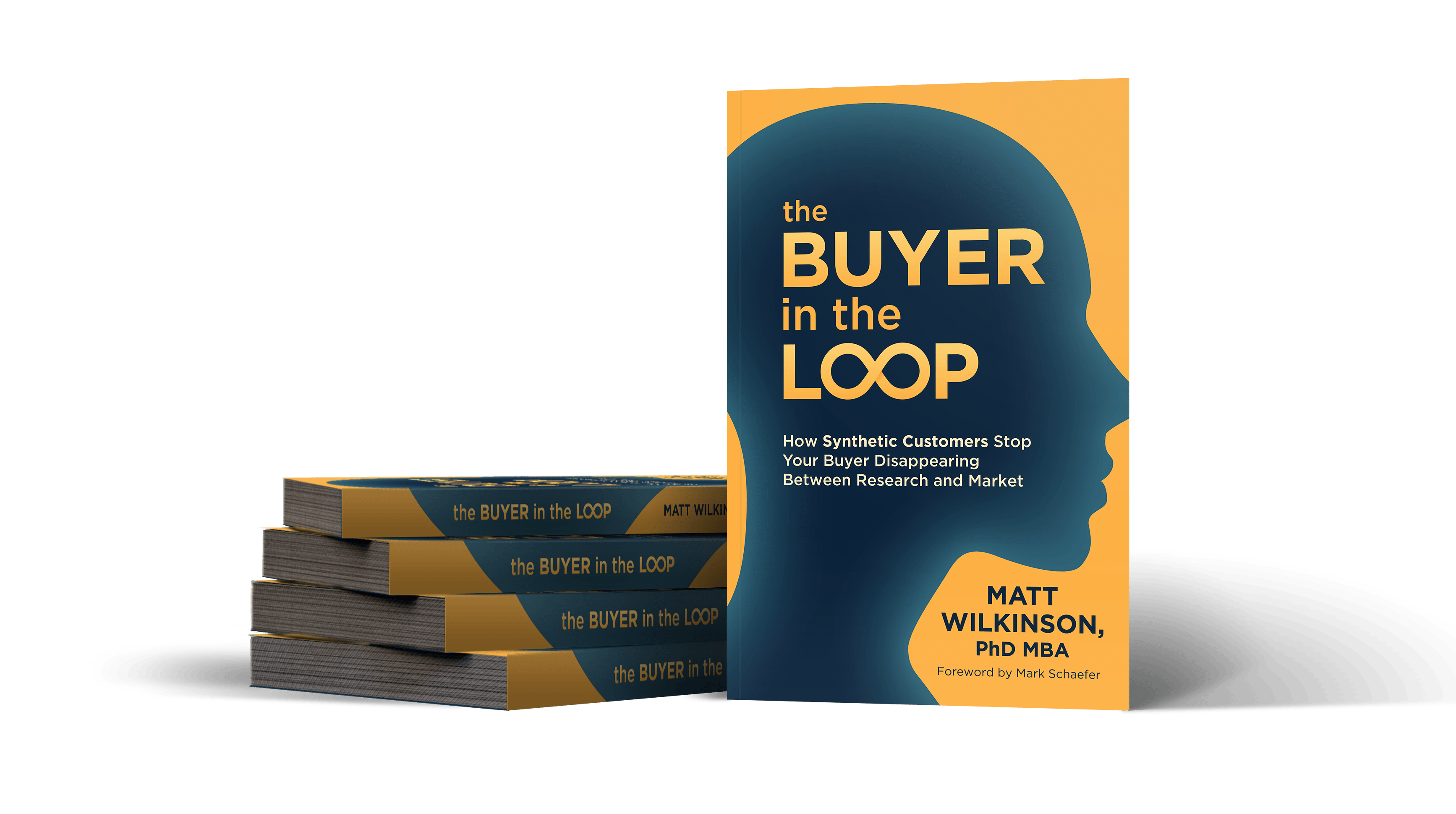
If that question is hard to answer, that is the place to start. My book, The Buyer in the Loop, shows how to keep the buyer present in the moments your commercial decisions actually get made.