
For years I couldn't work out why the same problems kept turning up in client engagements. Every time I sat down to try to resolve the problems,they felt like a brand new complaint, not a repeat of the last one. I treated each one as its own fix and never noticed I was describing the same fault line from a different angle each time.
I've been writing blog posts about these exact failures for almost a decade. I’ve written about persona documents nobody reopens, the gap between what sales says buyers want and what buyers actually said in the research. And I’ve complained about why internal reviews sand the edge off good copy without anyone intending harm.
Each time I treated the symptom as its own problem. Fix the persona template. Fix the sales handoff. Fix the review process. I kept prescribing local remedies for what I was slowly starting to suspect was a structural condition, not a series of unrelated mistakes.
The pattern was there the whole time. I just hadn't given it a name, and without a name it stayed a collection of grievances rather than an argument.
Sintra gave the failure gravity
I was at Joeri Billast’s Sintra Synergies retreat in April when it clicked. Not during a session, not from a slide. It was in the space between conversations where the pattern crystallised.
I named it organisational gravity on the flight home. The pull of legal sign-off, leadership comfort and institutional habit, dragging every buyer-facing decision and message back toward the room it was written in rather than the person it was written for. That was the moment the blog posts stopped being a backlog of ideas and became foundations for the book.
The book names the problem
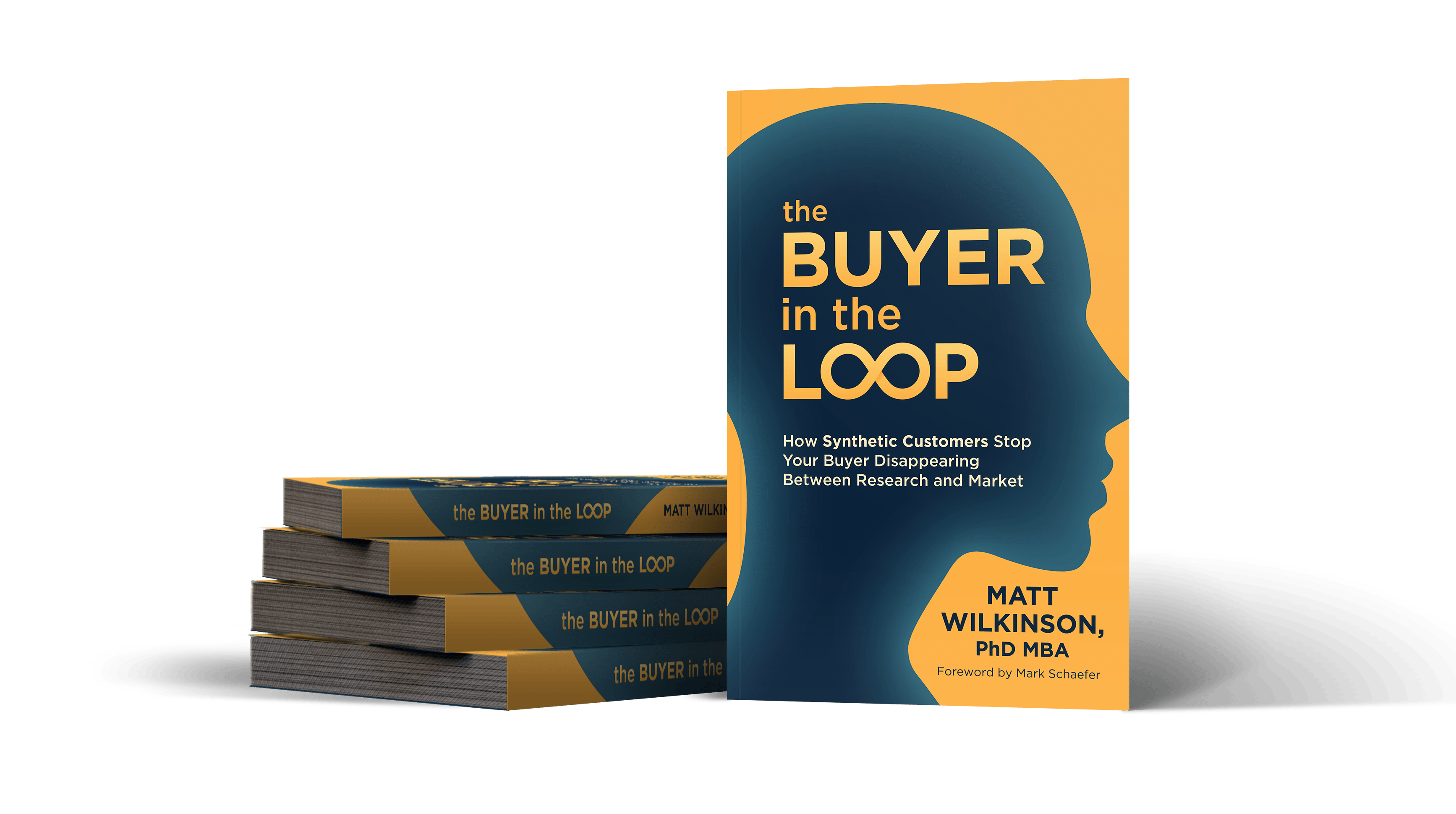
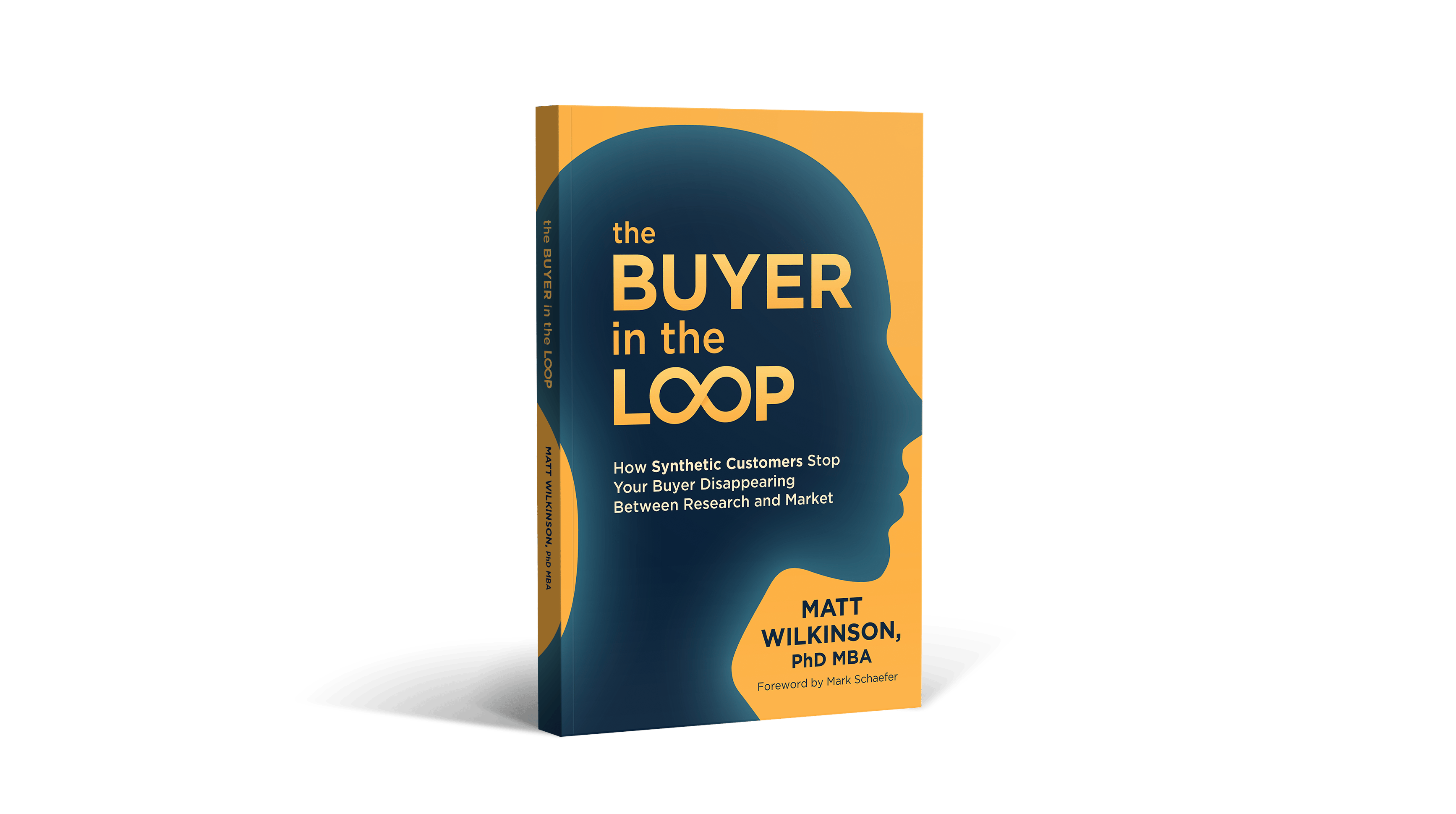
The book is called The Buyer in the Loop, and it publishes on 22 July and it opens with the narrative of a marketer who does everything right and still watches the buyer disappear from her own positioning between the brief and the launch. That's chapter one, and it's the scene most people in this line of work will recognise.
From there it moves into the mechanism: why organisational gravity exists structurally, because approval authority concentrates furthest from the buyer, not closest to them. Then it gets into what a synthetic customer actually is, and the distinction that matters most in the whole book: grounded versus ungrounded. An ungrounded synthetic customer is a language model doing an impression of your buyer from average internet data, the same impression any competitor could generate in minutes. A grounded one is built from your specific voice of customer evidence, the objections that kill your real deals, the language buyers use in a forum that they would never say to a salesperson.
Later chapters cover where synthetic customers genuinely fail, stated honestly rather than sold around, and why real human research stays non-negotiable rather than optional. One grounded synthetic customer built entirely from public signals, with no primary research spend behind it, produced email open rates above 35 percent in a category where 25 percent counts as strong. That is the kind of result the book argues for: not synthetic customers replacing real buyers, but keeping the buyer's actual voice present at the moments traditional research cannot reach, the Tuesday brief review, the Wednesday stakeholder meeting where someone wants to soften a headline.
The honest objection
The fair pushback is that a book will not fix a review culture. Organisational gravity is a structural, cross-functional problem, and structural problems are usually solved by changing incentives and process, not by a marketing leader reading 200 pages on a flight.
That's a real limitation, and I'd rather name it than pretend the book solves it alone. But naming a force is the precondition for designing against it. Nobody fixes a process they cannot describe to the people signing off on it, and most marketing leaders currently have no shared vocabulary to explain to legal or leadership why a specific edit is the one that severs the message from the buyer. The book does not replace the structural fix. It gives you the argument you need to start making it, in language a CEO or a regulatory lead will actually engage with rather than dismiss as marketing preference.
I spent years writing around this problem before I had the name for it. The book is about what happens once you finally do.